
Date: May 9, 2026

 COLOR PSYCHOLOGY IN DESIGNING KEY IN BRANDING
 Color increases brand recognition by up to 80%, influences purchasing decisions, and triggers emotional responses before a single word is read. Building the right brand color palette is a strategic process grounded in color theory, psychology, and your brand’s positioning.
Color selection follows brand strategy. Ask: What emotions should customers feel? Who is the target audience? What is the brand’s market position?
Create a 9-step scale (100–900) from lightest tint to darkest shade. 500 is your base brand color at full saturation.
Use color harmony principles: Analogous (adjacent on wheel), Complementary (opposite), or Triadic (three equally spaced).
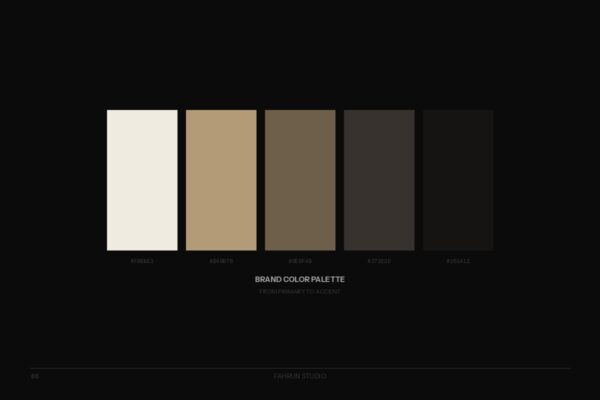
Include off-white, light gray, mid gray, dark gray, and near-black. Give neutrals a subtle tint that reflects your primary color for cohesion.
Use sparingly for primary CTAs and highlights. Should meet WCAG 4.5:1 contrast. Often a complementary color to your primary.
Include HEX, RGB, CMYK, and Pantone values. Add usage guidelines and examples of correct and incorrect use.
A well-built brand color palette is a strategic asset. Start from brand personality, build a systematic color scale, select harmonious secondary colors, and define functional neutrals for a foundation that works across every touchpoint.
Need help? Contact the Fahrun Studio team.